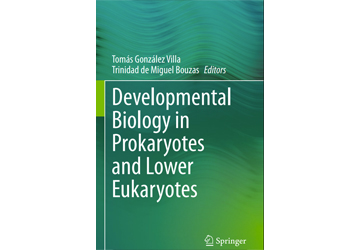
Developmental biology is widely understood as processes that mainly concern embryonic animal development and differentiation of cells and tissues. It is also often defined as the timeline for the evolutionary developmental biology of eukaryotic multicellular higher organisms, i.e., plants and animals. The development of prokaryotes and lower eukaryotes, in contrast, has been neglected for a long time, which was the motivation for publishing this book.
This book highlights one of Darwin’s most important findings: Evolution is a creative, but not a conscious process. It also illustrates that this concept does not only apply to multicellular higher organisms, but affects every form of life.
The reader shall find complex biochemical and genetic pathways of bacteria, yeasts, or protozoa, comparable to those exhibited by plants or animals. The molecular mechanisms of dramatic genome rearrangements, recombination, and horizontal gene transfer that are responsible for evolutionary adaptations are discussed. Additionally, the book covers bacteria of the genera Myxobacteriales and Caulobacterales, which are able to develop tissue-like cellular organization. The morphogenesis of entomopathogenic fungi and the endosymbiont theory are also addressed.